
The Starter Kit: Everything You Actually Need to Cook in a Dorm
Everything You Actually Need to Cook in a Dorm
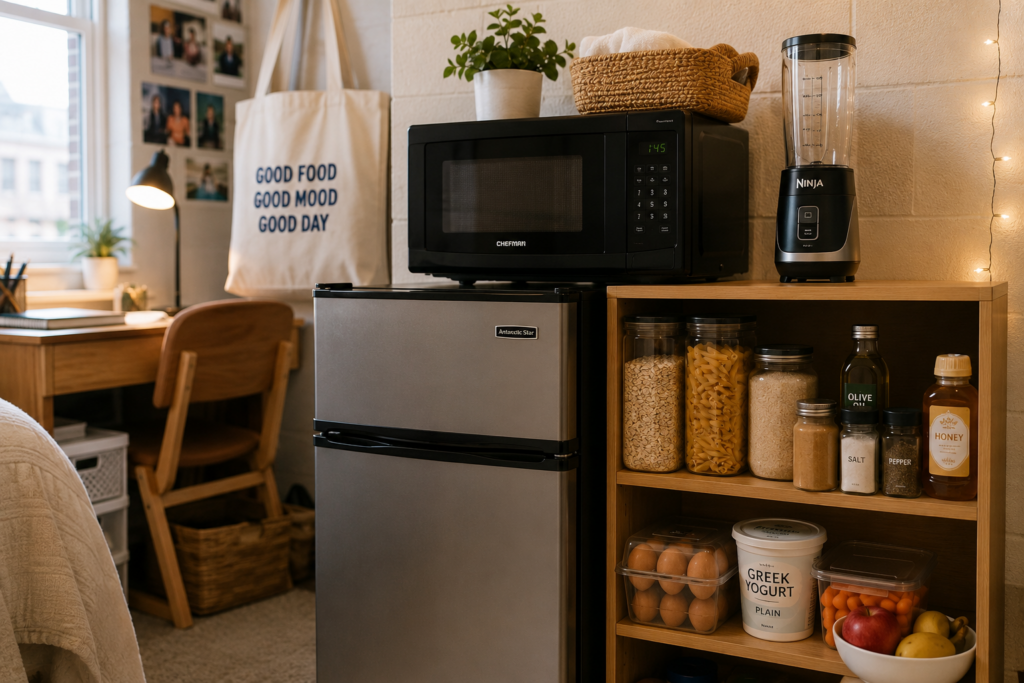
You don’t need a full kitchen to eat well in college. You just need the right few things that actually pull their weight. Every item on this list was chosen because it does more than one job, doesn’t take up much space, and won’t sit unused in a corner collecting guilt by November.
The Equipment
You don’t need much. But these few things make an enormous difference.
A microwave [link to microwave here] is non-negotiable, it’s your stove, your oven, and your reheating station all in one. A mini fridge [link to mini fridge here] keeps your staples fresh and your snacks accessible. A single-serve blender [link to blender here] is worth every penny for smoothies, sauces, and protein shakes, and takes up almost no counter space.
Already living in an apartment? Your needs are a little different, check out our full apartment kitchen guide. [link to apartment blog here]
The Pantry
These are the items that live in your cabinet and stretch across multiple meals all week. Buy them once and just replace what runs out.
- Rolled oats
- Pasta
- White or brown rice
- Peanut or almond butter
- Garlic powder, salt, and pepper
- Honey
- Olive oil or cooking spray
A good rule of thumb: if it lives in a can, a jar, or a packet and lasts more than two weeks, it belongs in this category.
The Fridge
A short list of fresh items worth keeping on hand almost all the time:
- Eggs, the most versatile, affordable protein in existence
- Greek yogurt, breakfast, snack, dip, sauce, and marinade all in one container
- A piece of fruit or bag of baby carrots
Ready to start cooking? Browse our beginner-friendly recipe collection built entirely around this list. [link to recipes here]
Extra Credit Reads
 2
Cooking for One in College: Why It Feels Hard and Why It Doesn’t Have To Be
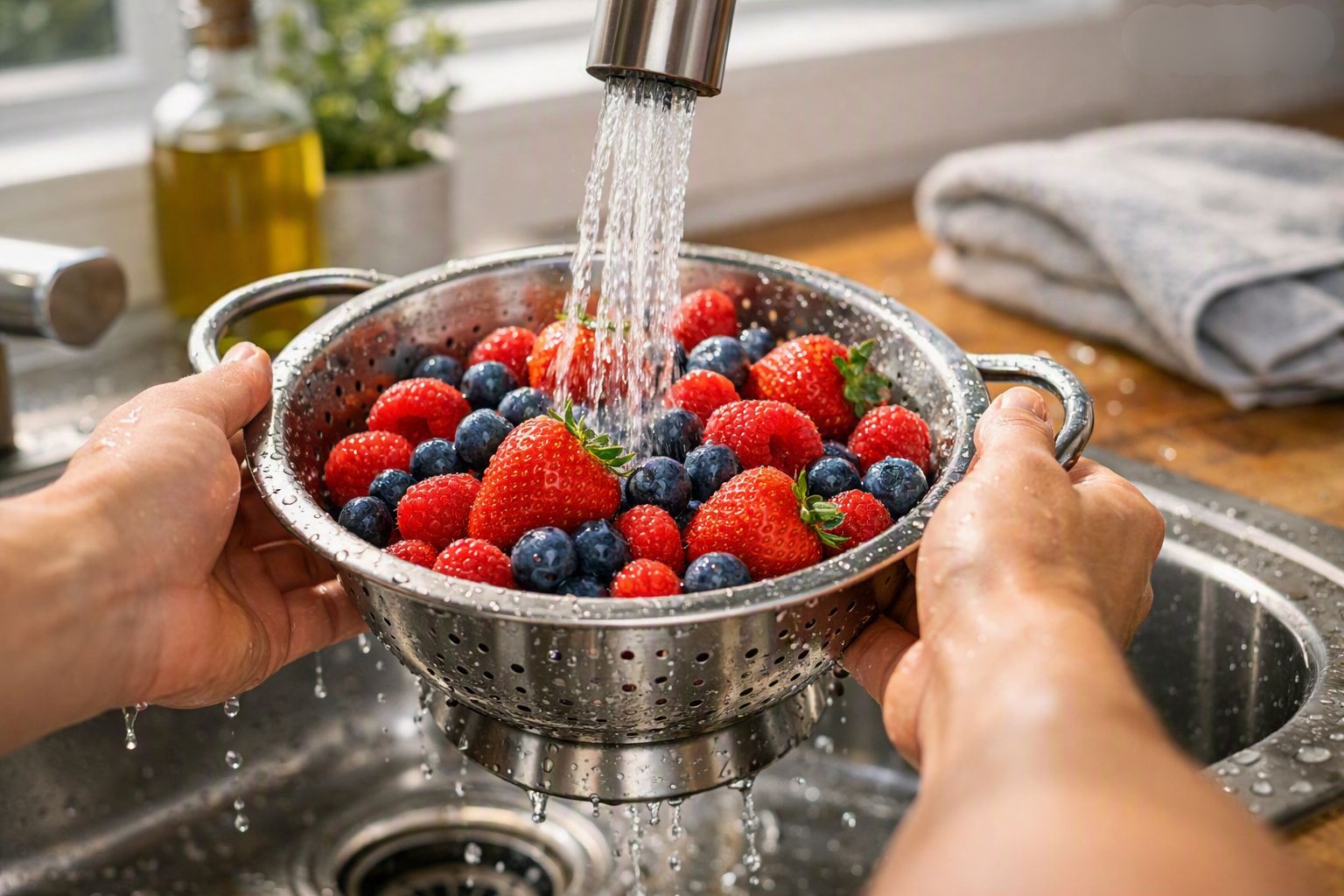
Most recipes feed four. Most kitchen habits are built around a full fridge, a real stove, and someone who already knows what they’re doing. Nobody really teaches you how to cook for just yourself, and then suddenly you’re in a dorm room with a mini fridge, a microwave, and a dining hall swipe you forgot to use before it expired. For students, that first semester can feel like a crash course in figuring out how to actually feed yourself. For parents, it’s a different kind of worry: you spent years making sure there was always something in the fridge, and now you’re handing that over to someone who maybe made scrambled eggs once. This guide is for both of you.
 2
The Internal Temperatures of Food
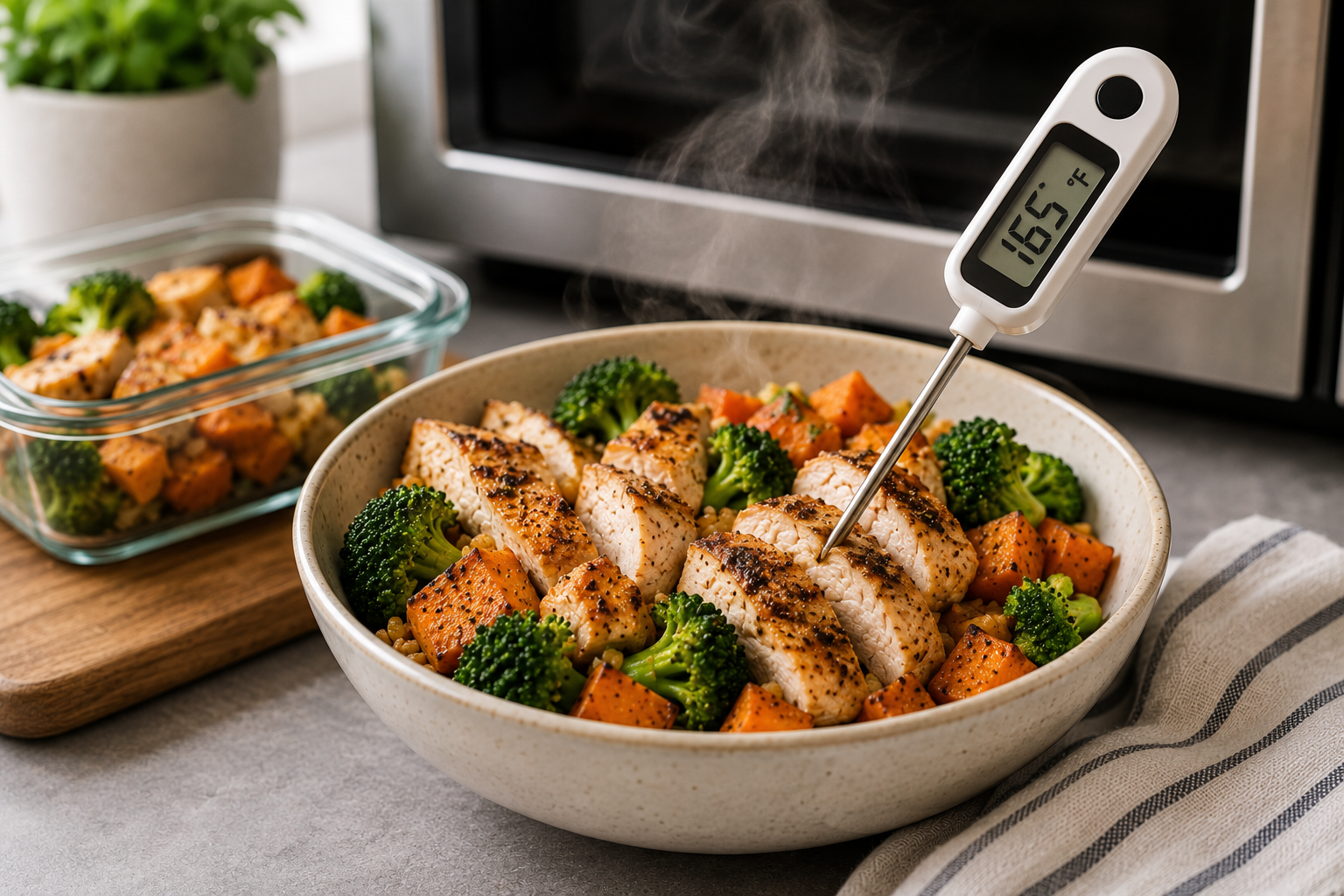
When cooking at home, many people rely solely on their eyes to determine whether a dish is fully cooked. However, the color and texture of the food do not always indicate that it is fully cooked. Using a meat thermometer can tell you the temperature of the food you are cooking, helping you determine if it is fully cooked. This is a very safe way to determine whether it is safe to eat, helping avoid food-related illnesses.
Poultry, seafood, eggs, and meats can contain harmful bacteria that, if eaten undercooked, can cause illness. This is why measuring the temperature of these foods is important for determining whether they are safe to consume.
 2
The Chicken Shredder: My Favorite Kitchen Tool for Fast, High-Protein Meals
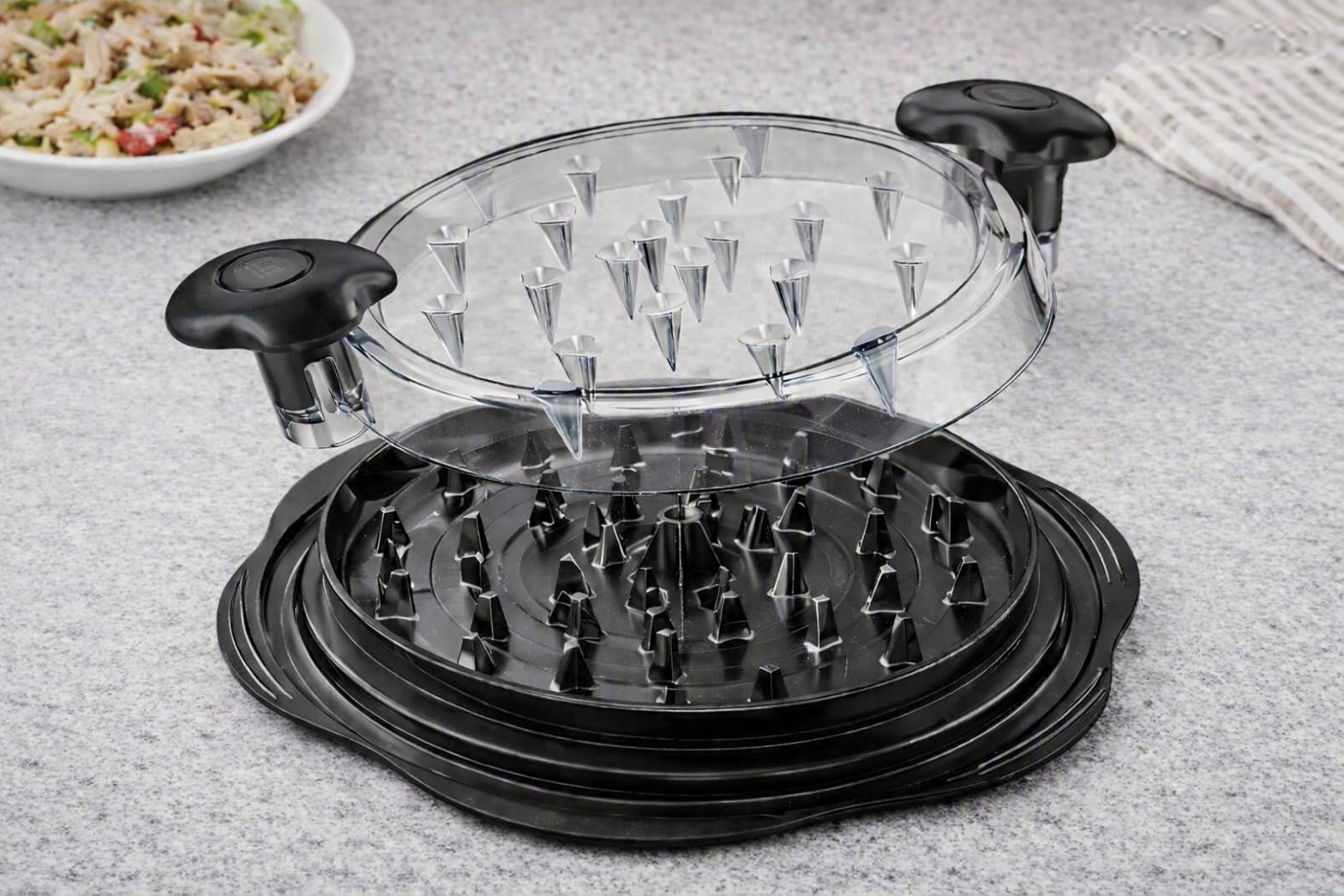
One of the most underrated challenges in athlete nutrition isn’t cooking the food—it’s making it convenient enough to actually stick with. That’s where the chicken shredder tool comes in. Instead of spending extra time using forks or waiting for meat to cool just enough to pull apart by hand, this tool turns cooked chicken into shredded, ready-to-use protein in seconds.
For busy college athletes, that time savings adds up quickly. Meal prep becomes less of a chore and more of a quick, repeatable system that supports consistent fueling.
 0
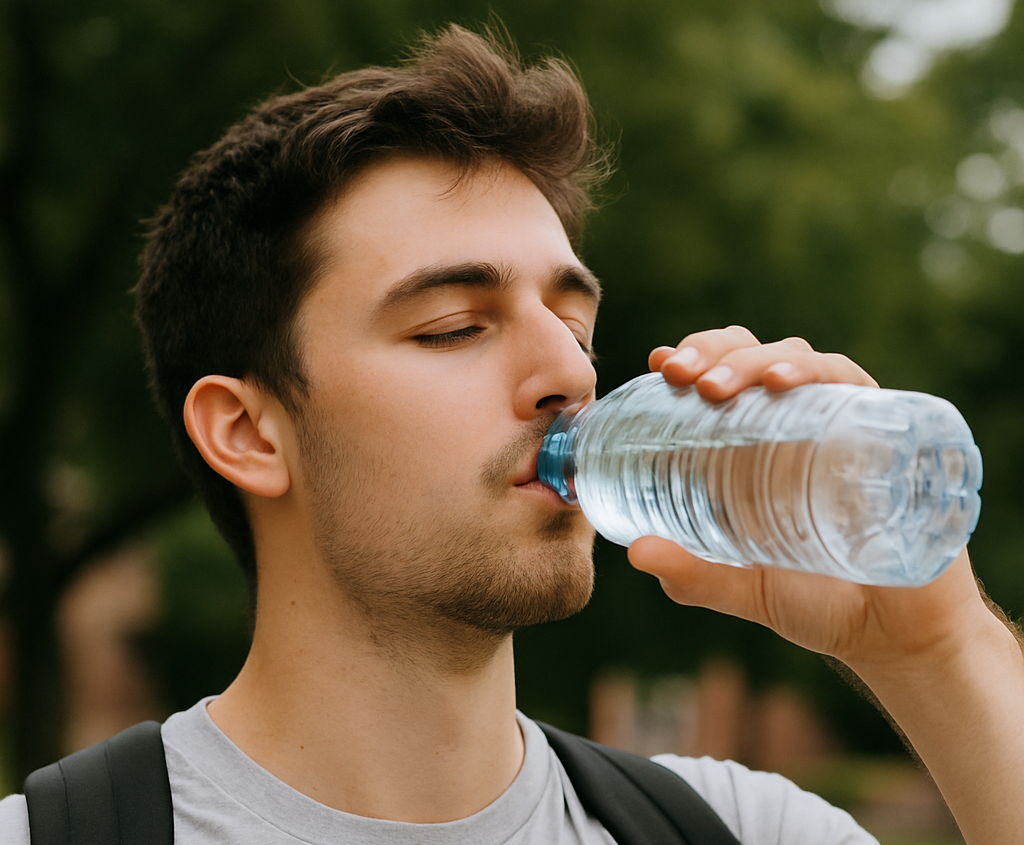
Why Hydration is Key: More Than Just Quenching Thirst
We all know we’re supposed to drink water, but do you know why it’s so vital for your health? Your body is about 60% water, and every single system depends on it. From regulating your body temperature to keeping your joints lubricated, hydration is a cornerstone of well-being.
Course Catalog
apartment cooking athlete nutrition avocado bacon Banana beginners beverage bread buffalo sauce caffeine cake Campus Dining Hacks carbohydrates cheese chia seeds Chicken chickpeas chocolate coconut oil coffee Dorm Cooking dorm cooking Easy Protein Sources Eating on a Budget eggs Featured Food Labels Simplified Food Safety Foundations General Nutrition Granola Greek yogurt healthy eating Hydration hydration macronutrients meal prep Meal Prep Basics milk Nutrition Basics oats Peanut butter pumpkin Reheating food Sports Nutrition sports nutrition Sugar Supplements supplements Wellness