
How to Shop Smart: Reading Unit Prices and Other Grocery Store Tricks
Reading Unit Prices and Other Grocery Store Tricks
The biggest skill nobody teaches before college isn’t cooking; it’s grocery shopping. Walking into a store with a budget and walking out having actually stuck to it takes a little bit of strategy, and most of that strategy comes down to one small number most people walk right past: the unit price.
What Unit Pricing Actually Is
Every price tag on a grocery store shelf has two numbers. The big one is the item’s total price. The small one, usually in the corner of the tag, is the unit price, the cost per ounce, per pound, or per count. That small number is the only way to compare two products fairly, because the bigger package isn’t always the better deal, and the smaller one isn’t always more expensive.
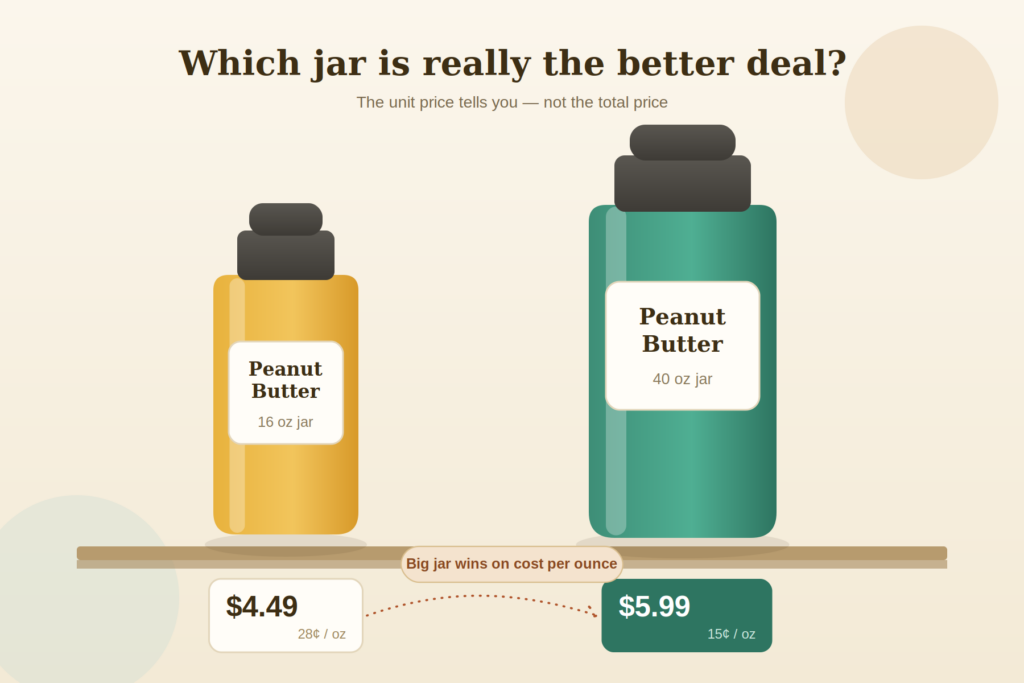
A jar of peanut butter priced at $5.99 might look more expensive than one priced at $4.49. But if the $5.99 jar is 40 ounces and the $4.49 jar is only 16 ounces, the bigger jar is actually the better value per ounce. The only way to know for sure is to check the unit price tag, not the total price
Why This Matters More in College
On a tight budget, a few cents per ounce adds up fast across a semester of grocery runs. Getting in the habit of glancing at unit price before grabbing whatever’s at eye level can save real money over time without changing what you’re actually buying
A Few Other Smart Shopping Habits
Store brands are worth trusting. Pantry staples like oats, pasta, canned beans, and frozen vegetables are typically the same product as the name brand, often made in the same facilities, at a noticeably lower price.
Shop the perimeter first. Most grocery stores are laid out with fresh basics, produce, dairy, eggs, around the outer edges, and the more processed, higher-markup items in the center aisles. Building your cart around the perimeter naturally keeps the bill lower.
Buy in bulk only if you’ll actually use it. A 5-pound bag of rice has a better unit price than a 1-pound bag, but only if it gets used before it goes stale or you run out of space to store it. Bulk buying only saves money if the food gets eaten.
Watch for sale stacking. Items already on sale sometimes have an even better unit price than usual, worth a quick scan if you already buy that product regularly.
Extra Credit Reads
 2
The Starter Kit: Everything You Actually Need to Cook in a Dorm
Ever hear people talk about “counting their macros” and wonder what it all means? Macronutrients are the three main types of nutrients your body needs in large amounts to function correctly: carbohydrates, proteins, and fats. Understanding what they do can empower you to build a healthier, more balanced diet.
 2
Making Smart Choices in the Dining Hall
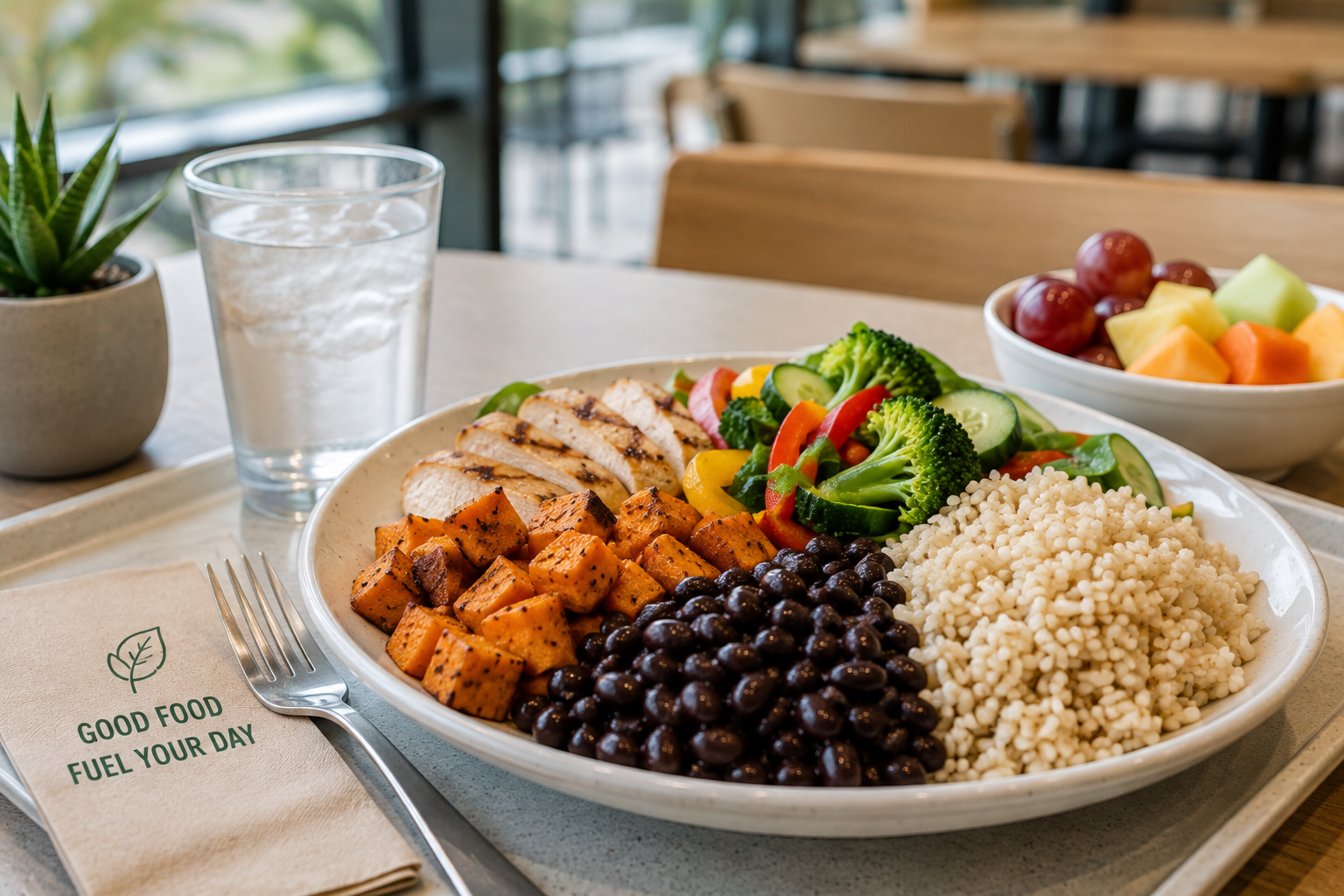
When you first go to college, the dining hall can be intimidating with the variety of food choices and places to eat breakfast, lunch, or dinner. With a few simple strategies, eating smart in the dining hall is very achievable while still enjoying your favorite meals and snacks!
2
The Apartment Tools Worth Owning (And the One I’d Never Cook Without)
You don’t need a drawer full of gadgets to cook well in an apartment. Most of what you’ll actually reach for from week to week is a short list of simple, durable tools, and one of them, a wooden spoon, ends up doing more work than almost anything else in the kitchen.
2
The Apartment Starter Kit: Upgrading Your Setup From Dorm to Real Kitchen
You have an actual kitchen now. Here’s how to use it without overcomplicating it. The goal is the same as it was in the dorm: a small, intentional setup that actually gets used. Just with a little more room to grow.
Course Catalog
apartment cooking athlete nutrition avocado bacon Banana beginners beverage bread buffalo sauce caffeine cake Campus Dining Hacks carbohydrates cheese chia seeds Chicken chickpeas chocolate coconut oil coffee Dorm Cooking dorm cooking Easy Protein Sources Eating on a Budget eggs Featured Food Labels Simplified Food Safety Foundations General Nutrition Granola Greek yogurt healthy eating Hydration hydration macronutrients meal prep Meal Prep Basics milk Nutrition Basics oats Peanut butter pumpkin Reheating food Sports Nutrition sports nutrition Sugar Supplements supplements Wellness